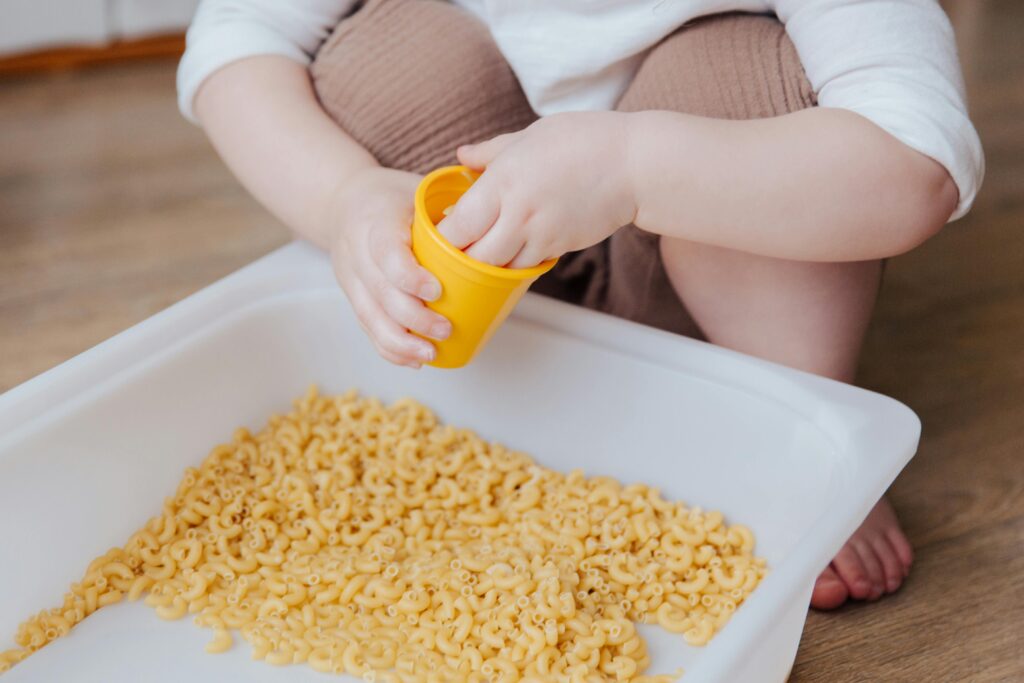
Sensory play is a vital part of early childhood development, providing children with opportunities to explore and engage with the world around them through their senses. Whether it’s feeling the texture of sand, smelling the scent of fresh playdough, or listening to the crunch of leaves underfoot, sensory play offers a wealth of benefits that extend far beyond simple entertainment. In this blog, we’ll delve into the many ways sensory play supports children’s growth and development, inspired by the teachings of this independent school in Surrey.
Enhancing Cognitive Development
One of the primary benefits of sensory play is its positive impact on cognitive development. Through sensory experiences, children learn to observe, compare, and categorise the world around them. For instance, when playing with water, they may notice how objects float or sink, leading to early lessons in cause and effect, as well as basic scientific principles.
Moreover, sensory play encourages problem-solving and decision-making skills. When children engage with different materials and textures, they learn to navigate new challenges, such as figuring out how to build a stable sandcastle or what happens when they mix colours together. These experiences help to build their cognitive abilities and enhance their capacity for creative thinking.
Supporting Language Development
Sensory play is also a powerful tool for language development. As children explore different textures, shapes, and materials, they naturally begin to describe what they feel, see, and hear. This encourages them to use new vocabulary and practice sentence formation, boosting their communication skills.
For example, when playing with a sensory bin filled with rice, a child might say, “The rice feels soft and slippery,” or “I hear the rice falling like rain.” These descriptive words and phrases help to expand their vocabulary and improve their ability to express themselves. Additionally, when sensory play is done in groups, it fosters social interactions and cooperative play, further enhancing language skills through shared experiences and conversations.
Promoting Social and Emotional Growth
Engaging in sensory play also supports children’s social and emotional development. It provides a safe and enjoyable way for them to explore their emotions, work through challenges, and build resilience. For example, the calming nature of activities like playing with kinetic sand or squeezing a stress ball can help children self-regulate their emotions, reducing anxiety and frustration.
Furthermore, sensory play often involves cooperative activities that encourage children to work together, share, and take turns. These interactions help them develop important social skills, such as empathy, communication, and conflict resolution. By playing alongside others, children learn to understand different perspectives and build meaningful connections with their peers.
Refining Motor Skills
Sensory play is also essential for the development of both fine and gross motor skills. Activities that involve manipulating small objects, such as threading beads, pouring water, or shaping dough, help to refine fine motor skills and hand-eye coordination. These skills are crucial for later tasks such as writing, buttoning clothes, and using utensils.
On the other hand, sensory activities like jumping in leaves, running through a sensory obstacle course, or digging in sand support the development of gross motor skills. These actions help children build strength, balance, and coordination, all of which are important for overall physical development.
Encouraging Creativity and Imagination
Finally, sensory play is a wonderful way to stimulate creativity and imagination. The open-ended nature of many sensory activities allows children to explore and experiment without the fear of making mistakes. They can create their own worlds with sensory materials, imagining new scenarios and stories as they play. Whether they’re building a mini-city out of blocks and sand or creating imaginary creatures with playdough, sensory play offers endless opportunities for creative expression.
Sensory play is more than just a fun activity; it is a foundational element of early childhood development that supports cognitive, language, social, emotional, and motor skill growth. By incorporating sensory play into daily routines, parents and educators can help children explore their senses and develop important life skills in an enjoyable and engaging way.