Creating Fun and Functional Spaces for Kids – Designing spaces for kids requires a blend of creativity and functionality. It’s about crafting an environment that encourages play, learning, and growth while being practical and adaptable to their changing needs as they grow up.
Creating Fun and Functional Spaces for Kids
Different Things for Different Ages
Before you dive into the design process, take a moment to think about the unique needs of children at different stages of their development.
- Infants and Toddlers need safe, soft, and sensory-rich environments.
- Pre-schoolers need spaces that encourage imagination and motor skills development.
- School-Age children benefit from organised areas for study and hobbies.
- Tweens and Teens may prefer spaces that reflect their personalities and provide privacy where they can relax or have friends over.
Planning the Space
- Create a safe environment by ensuring the space is childproof. Secure shelving to walls, for instance, use non-toxic materials, and eliminate sharp edges where possible.
- Design an area that’s flexible as you move into the future. You could focus on furniture and decor that can evolve with your child’s changing tastes and needs.
- Try zoning if space allows, by creating distinct areas for different activities. For example, a reading nook, a gaming zone or a study station.
Choose the Right Furniture
- Multi-functional Furniture. Look for pieces that serve multiple purposes, such as a bed with storage drawers or a desk that doubles as an art station.
- Size-Appropriate. Choose furniture that is appropriately sized for your child. This makes the space more accessible and comfortable.
- Quality and Durability. Invest in high-quality, durable furniture that can withstand the wear and tear of active children.
It’s worth bearing in mind that kids’ needs can evolve quickly, and you can minimise future expense if you save good quality items the older children have outgrown. Stow these away in a self storage unit and you have more choice when you’re fitting out rooms for growing younger family members or dealing with other changes in your family dynamics.
Incorporating Playful Elements
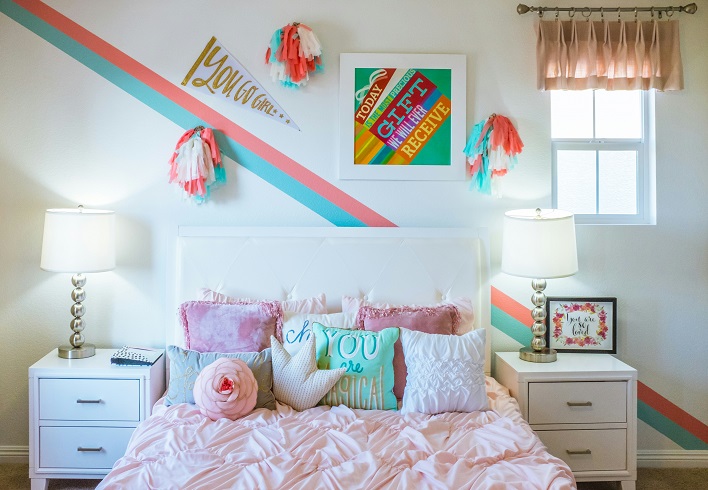
- Use bright colours and fun themes that resonate with your child’s interests. This could be anything from a jungle adventure to an outer space theme.
- Include elements that children can interact with, such as chalkboard walls, climbing structures, or a mini stage for performances.
- Keep the space tidy with creative storage solutions like colourful bins, shelves, and under-bed storage. It’s easier to encourage children to tidy up their rooms when they know exactly where things belong.

Creating Learning and Study Areas
This is especially important for older children who need a quiet space to study and do homework, but it also plays a part in the development of kids of all ages as they grow up and explore the world.
- Ensure that desks and chairs are ergonomically designed and size appropriate to support healthy posture.
- Make sure there’s adequate lighting for reading and homework. Natural light is ideal, if possible, but also use good task lighting on desks or in reading zones.
- Help kids stay organised by using bulletin boards, pegboards, and desk organisers so they can make notes, write to-do lists, and have pens or pencils handy.
Encourage Creativity
- Set up art and craft stations so there’s a dedicated area with supplies for drawing, painting, and crafting. For younger children, consider a rolling trolley so the art can go wherever it’s needed.
- Include spaces where kids can display their artwork and achievements. This could be a gallery wall or a series of shelves if you like to frame special pieces or certificates.
- Don’t forget musical and dramatic play. There are all kinds of ways to encourage artistic expression, with either musical instruments or costumes for dressing up and role play.
- Rotate items and toys in and out of self storage to help keep kids’ areas fresh and interesting. When you notice things lying idle or persistently ignored, take it as a cue to give that object a rest. When it hasn’t been around for a while, it’ll gain a new lease of life when you bring it back – and if it’s safely in self storage you won’t accidentally throw a cherished item away.
Get the Kids Involved
Even very young children can have definite ideas and opinions about what they like and dislike, so giving them some say will help make a successful design. This could include picking out colours, themes, or choosing some furniture pieces and adding personal touches with family photos, favourite books or beloved toys.
Creating fun and functional spaces for kids can be really rewarding for everyone, but especially for children. They’ll grow up confident, outgoing, willing to learn and engage with the world which is the best any parent could hope for.